Trading a hammer
Intermediate · 2 min
Enter on the confirming close, put the stop under the hammer's low, and size the trade so that stop costs what you planned.
A hammer gives you something most setups do not: an obvious price at which you are wrong. If the share closes below the hammer's low, the buyers who made the hammer have been beaten, and the reason you bought has gone. That makes the exit easy to set before you enter.
- Wait for a day that closes above the hammer's high. Buy at that close, not during the hammer.
- Put your stop loss just below the hammer's low.
- Set a target at twice the distance from your entry to your stop.
- Size the trade so that hitting the stop costs the amount you decided in advance.
A hammer on a ₹400 share, with ₹1,00,000 in the account
- Hammer day: open, high, low, close
- ₹390, ₹396, ₹380, ₹394
- Body and lower wick
- ₹4 and ₹10 — the wick is 2.5 times the body
- Next day's close, above the ₹396 high
- ₹402 — your entry
- Stop, just under the hammer's low
- ₹378
- Risk per share
- ₹24
- Target, twice the risk above entry
- ₹450
- Most you will lose: 1% of the account
- ₹1,000
- Shares: ₹1,000 ÷ ₹24
- 41, costing ₹16,482
The stop decided the number of shares, not the other way round. A hammer with a longer wick puts the stop further away, which means fewer shares for the same ₹1,000 of risk.
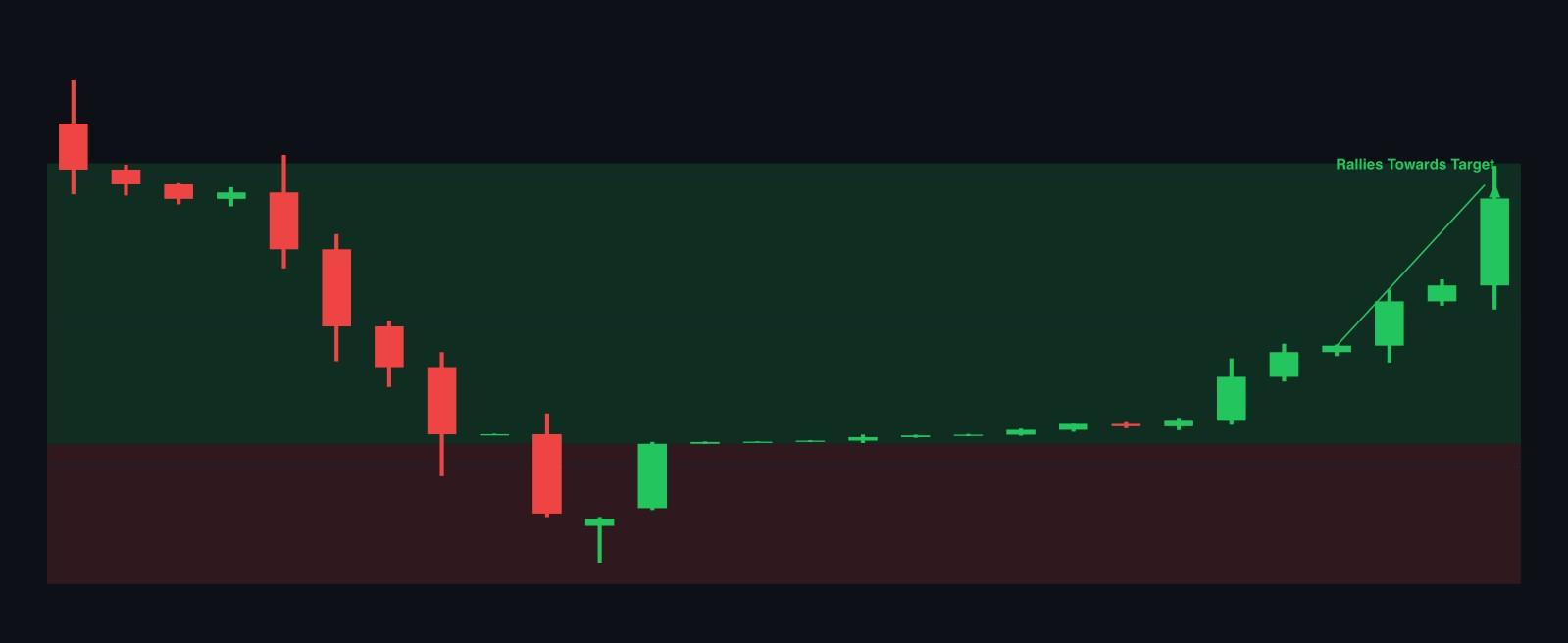
Notice the sideways stretch before the rise. A trade that is working often does not look like it is working. Holding through that is what the stop is for: you stay in while the price is above it, and you leave when it closes below, without arguing with yourself either way.
Try this in the app
- Calculators — work out position size from your stop
Share this lesson
Works with
- Candlestick charts — Each candle packs a whole day of trading into one shape.
- Stop losses — The price you decide, before you buy, at which you will admit you were wrong.
- Where to put the stop — Put it where the reason you bought stops being true.
- How much to put in one trade — Decide what you can afford to lose first, and let that set the size.